
How Pixel Federation moved nine games to in-game support and turned ticket spikes into one-day problems
9+
Games migrated to unified platform
1 day
Incident resolution (from multi-day)
140M+
Players supported
The challenge
Pixel Federation's old support setup had become dead weight. Not "on fire" in a dramatic way—it just kept getting worse, slowly, while the team built workaround after workaround to keep it running and players happy. Supporting nine games and serving more than 140 million players means the support system cannot be "good enough." At this scale you need something that handles live incidents, ticket spikes, VIP tiers, multilingual players, and a knowledge base that can be updated weekly. And it needs to meet players where they are—inside the game—without sending them through multiple redirects.
The solution
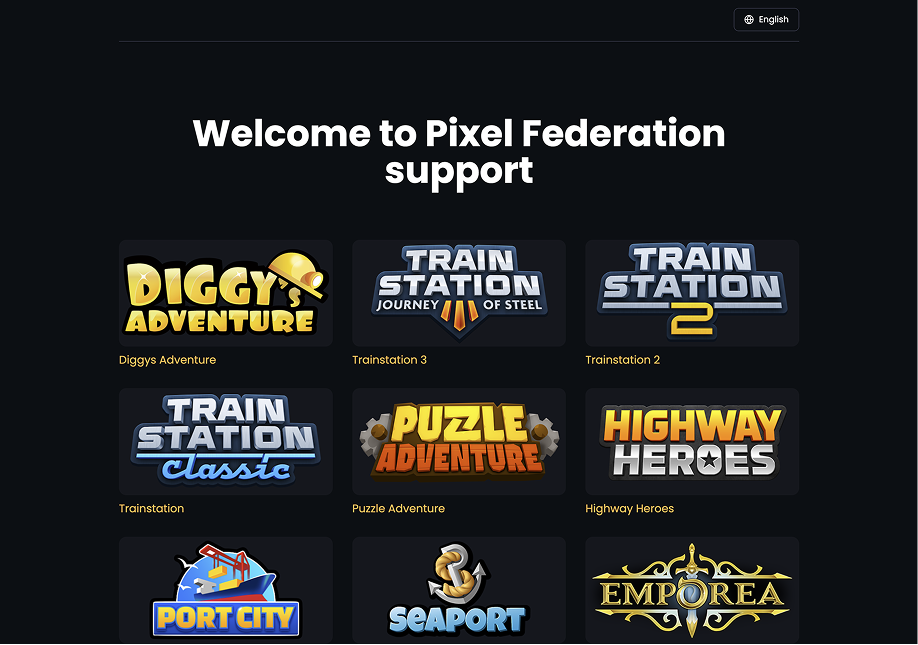
Pixel Federation moved all nine games and Pixel ID to Theymes. That meant ten separate workspaces, each with its own player behavior, workflows, and content needs. Some titles were active live services with frequent updates. Others were in maintenance mode but still had an active player base that occasionally needs support. One deliberate decision extended the rollout: they wanted the knowledge base in place before launch so the AI assistant would be useful on day one. The SDK integration itself was straightforward. The real work was operational: building a solid content foundation and making the in-game support experience feel coherent across all titles.
"Switching to Theymes was a huge relief. Suddenly, we realized there are colours and music again. Support work doesn't have to feel heavy all the time. If you're considering Theymes, don't even think twice. Just do it."
Filip Dúdor, Producer
The trigger to switch
The trigger to switch was not a board-level strategy pivot. It was frustration. The previous platform felt like it had stopped moving forward, and Pixel Federation was tired of compensating for that with internal hacks and side tools just to deliver a reasonable player experience.
The real scope of the problem only became obvious during migration. Pixel Federation used a word that surprised us: frustrating. Not because moving to Theymes was hard, but because unplugging the old system exposed how much hidden infrastructure they were forced to build over the years to make support tolerable as the player base grew.
They found these onion layers everywhere. Things that were supposed to be native features turned out to be custom logic written years ago. One example was ticket volume alerting. It was thought that the support tool was flagging spikes. In reality, the alert was being triggered by their own data-warehouse logic, built around how the old platform behaved. Disconnecting the support tool meant disconnecting a whole ecosystem—for better.
The migration
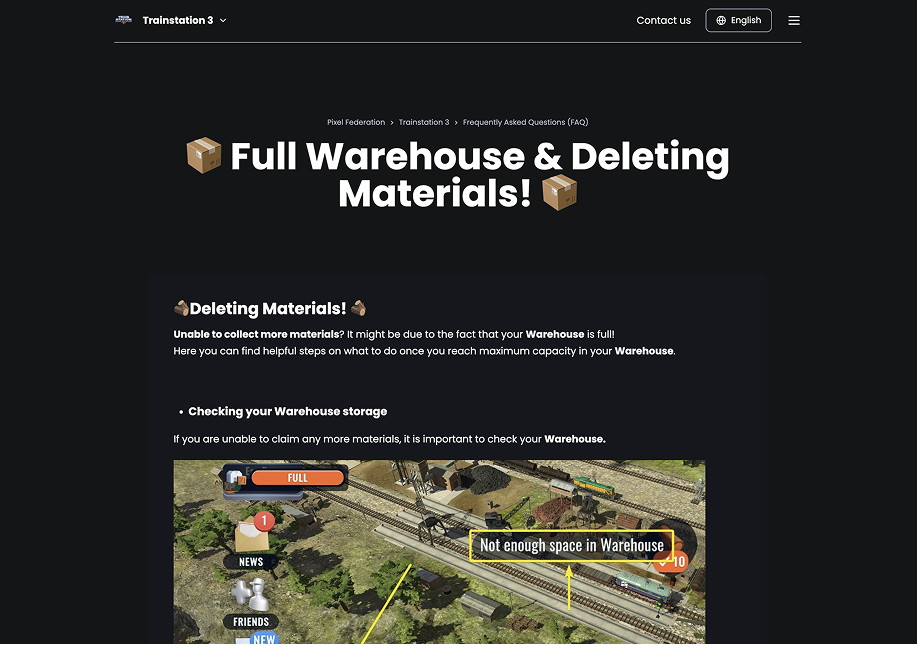
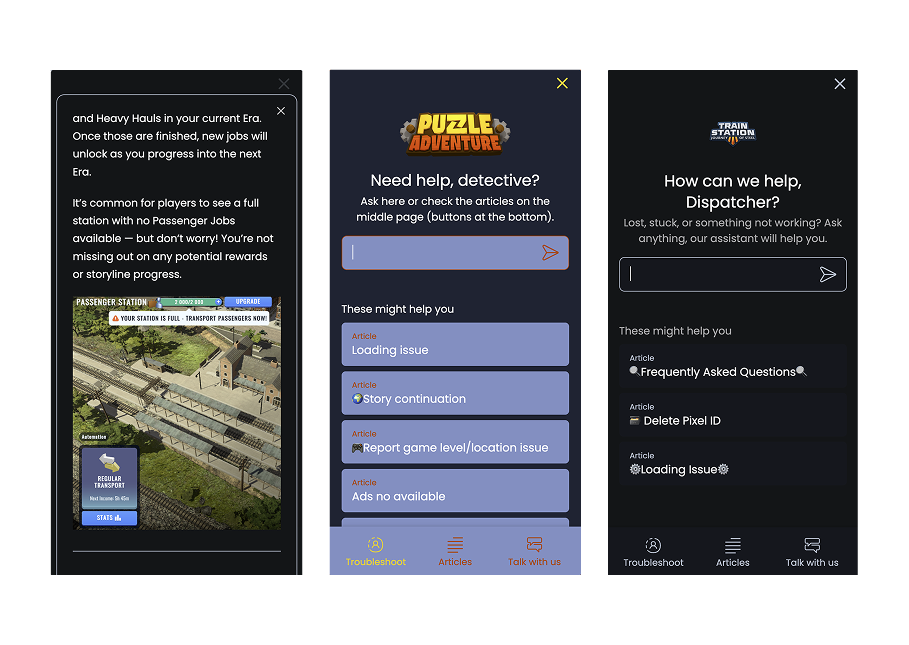
Collaboration started in September. Most of the timeline came down to internal scheduling and backlog planning rather than technical blockers. One deliberate decision extended the rollout: they wanted the knowledge base in place before launch so the AI assistant would be useful on day one. Shipping an "AI assistant" that cannot answer anything is not a launch—it could be a disappointment.
Knowledge base work took a few extra weeks, mostly content import and imagery. The SDK integration itself was straightforward. The real work was operational: building a solid content foundation and making the in-game support experience feel coherent across all titles.
Impact
Once support was available inside the game, friction dropped immediately. Players could get help without leaving the game, without hunting for the right page, and without being bounced between channels.
What mattered more was what happened after launch. As the team invested in the knowledge base and learned how to steer AI usage, ticket volume started to trend down from the initial spike. The novelty wore off, and self-serve answers began absorbing repeat questions before they became tickets.
The biggest operational win showed up during incidents. Every live ops team knows the pattern: a short outage can create days of aftermath. Support gets buried in repeats, internal coordination, copy-paste replies, and cleanup that leaks into nights and weekends. With Theymes, Pixel Federation could publish an incident article fast, use automation and AI-assisted replies, and handle hundreds of conversations in a fraction of the time. What used to take several days of cleanup became something they could largely close within a day.
Working with Theymes
Response times were consistently top notch, but the bigger difference was that Theymes was often one step ahead. Pixel Federation would bring up a feature request, flag a bug, or test an edge case and hear some version of: "Already on it." Then the improvement would land shortly after. For a studio running live titles, that combination matters: fast reaction time, plus a product team that anticipates what live ops support actually needs.
- Nine games plus Pixel ID migrated to a support platform built for games
- In-game support via SDK, removing friction for players reaching out
- Incident handling improved from multi-day cleanup to one-day resolution
- AI support enhancements, bringing modern capabilities into day-to-day operations
- AI assistant doubled as a product insight tool, showing what players actually struggle with vs. what teams assume
- Support team gained a credible path from reactive ticket handling toward higher-value community programs